Information Technology
WeBot Services: Creative AI Workspaces, Chatbots and Voice Agents
WeBot's public website presents creative model workspaces alongside AI agent services. Understanding that combination starts with the job you want to complete, rather than assuming every model or assistant works in the same way. This independent guide follows a fictional community learning club as it plans promotional assets and answers visitor questions. It does not describe a WeBot integration in Didloo, demonstrate paid generation or claim that independent vendors such as fal, ElevenLabs or Twilio are integrated into either product.
Separate the project into useful outcomes
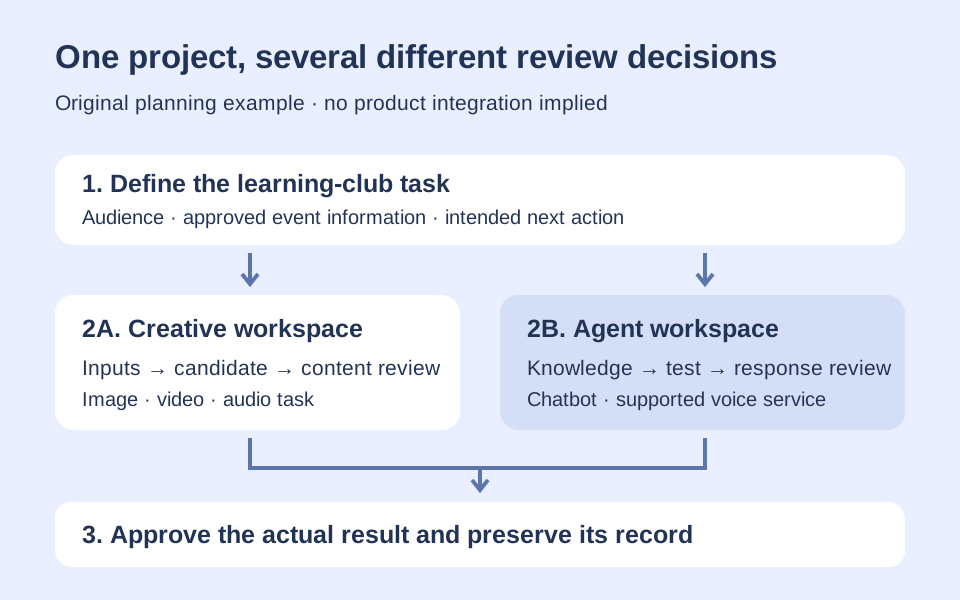
Bridge Street Learning Club is a fictional organisation preparing an introductory pottery weekend. It needs a promotional illustration, a short video concept, an optional audio introduction and a clear way to answer questions about attendance. These are related activities, but each has its own definition of a satisfactory result.
Write an outcome for each activity before choosing a service. The illustration should leave space for the workshop details. The video should explain what participants will do. An information assistant should use the approved schedule rather than guess about spare places. This breakdown helps the club judge each workflow on its own merits. It also prevents the team from treating a visually impressive result as proof that the entire event communication process is complete or that an assistant can answer questions its source material never addressed.
Understand the public catalogue and the owned workspace
WeBot's About page describes public exploration of creative workspaces and guides, with verified sign-in required for credit calculation and generation. It also distinguishes public agent guidance from private account configuration and conversation records. Those boundaries are useful when evaluating the product before deciding whether to use a particular service.
The learning club can first identify a plausible task and inspect its public information. That discovery step should not be confused with having configured an agent or run a generation. Keep a project note separating what the team has read, what it has configured and what it has actually tested. A catalogue listing provides a starting point for evaluation; it is not a record of a completed project or an entitlement to every feature that might appear elsewhere on the website.
Search for a task rather than a fashionable name
The WeBot homepage provides model discovery by task, with image, video, audio and agent destinations. Its directory is a way to narrow the available choices before inspecting an individual workspace. Confirm the current page and settings instead of assuming a model's name explains every input or limit.
For the pottery weekend, the club might search for a workflow that creates an illustration from text. If it later wants to animate an authorised photograph, that is a different task. Describe the change explicitly. A useful comparison begins with candidates that address the same requirement. Otherwise, the team may spend time comparing a still illustration with a motion tool while overlooking that each expects a different starting point and produces a different kind of result.
Read the selected workspace before preparing files
An individual workspace's supported controls are more useful than a general expectation about what AI should accept. Identify the required inputs, supported choices and intended output before gathering project material. A file suitable for one task may not meet another task's requirements.
Bridge Street can prepare a short input checklist for the selected workflow. Record which image is authorised, which text version has been approved and which settings need a decision. This is a suggested production practice, not a claim that every workspace has the same form. Preparing inputs around the actual contract reduces preventable confusion. It also makes a later error easier to explain, because the team can check the original preparation against the requirements it actually read rather than against an assumption from an unrelated example.
Make a clear brief for the promotional illustration
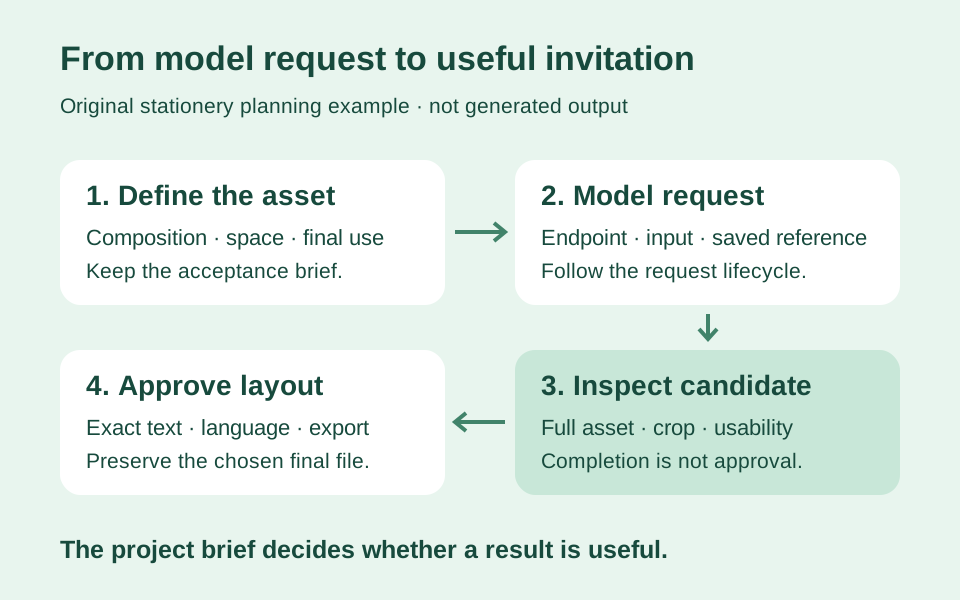
The club's illustration needs to communicate a beginner-friendly pottery activity without making promises about a participant's final work. A useful brief could specify a welcoming composition, visible tools and an area reserved for the organiser's event text. Keep the audience and final layout in view.
After a candidate is available, inspect whether those relationships are present. Does the composition support the workshop description, or does it suggest an advanced class the club is not offering? This is an editorial decision for the organiser. Do not approve an image solely because it is attractive in isolation. Record the reason a candidate was selected, including any crop or layout adjustment, so that the published poster remains connected to the event information that was actually approved.
Keep dates and booking instructions under editorial control
Promotional artwork and exact event information serve different purposes. Decide how the date, venue, eligibility and booking instructions will be added and checked. Those facts should be easy to update when the organiser changes the schedule.
For Bridge Street, imagine that the second session moves to another room. The final poster needs a clear, reviewable change to its location information. Whether an image workflow generates decorative lettering or the team adds all text separately, check the published wording carefully. A plausible-looking date is not enough. This is an original production recommendation rather than a universal statement about a particular model's lettering capability. The organiser remains responsible for the invitation being accurate, even when the visual material came from an automated workflow.
Plan a video as a sequence of ideas
A short workshop promotion should have an intelligible beginning, middle and ending. Start by writing what each segment contributes: introducing the activity, showing the kind of experience being offered and directing the viewer to the approved booking information. A video workflow can then be evaluated against that sequence.
Bridge Street could draft a few original scene descriptions before selecting suitable tools. A beautiful opening that never explains the event is a weak invitation. Likewise, rapid movement may compete with information viewers need to understand. Review the sequence at the actual intended duration and display size. These are planning exercises, not claims that a particular WeBot model was used to produce a finished video or that every model offers the same editing and timing controls.
Distinguish a reference image from a complete instruction
An authorised photograph can establish a visual starting point, but the intended transformation still needs to be described. Identify what should remain recognisable and what may change. Inspect the selected workspace to learn which reference inputs it actually supports.
The club might have a photograph of an empty workbench and want a concept showing its atmosphere. That task is different from documenting the real weekend as it occurred. Keep the distinction clear in file labels and publication decisions. A generated interpretation should not become evidence of attendance, facilities or outcomes that have not been recorded. This helps the team use creative references while keeping factual event communication grounded in what the organiser can actually confirm.
Match audio to the job it must perform
WeBot's audio page distinguishes tasks such as creating sound or music, generating speech, processing a recording and transcription. Inputs and supported settings vary by workspace. Read the selected model controls rather than treating every audio destination as a single interchangeable service.
Bridge Street might want spoken information for an event introduction, while a separate creative exercise explores instrumental background sound. These have different review questions. The spoken information must convey the correct details; the background should support the intended atmosphere without obscuring speech. Keep the resulting files and their purpose separate. This article reports no generated sample or measured model quality. It explains how the club could define a useful evaluation before deciding whether a particular audio workflow fits its project.
Review the complete audio result
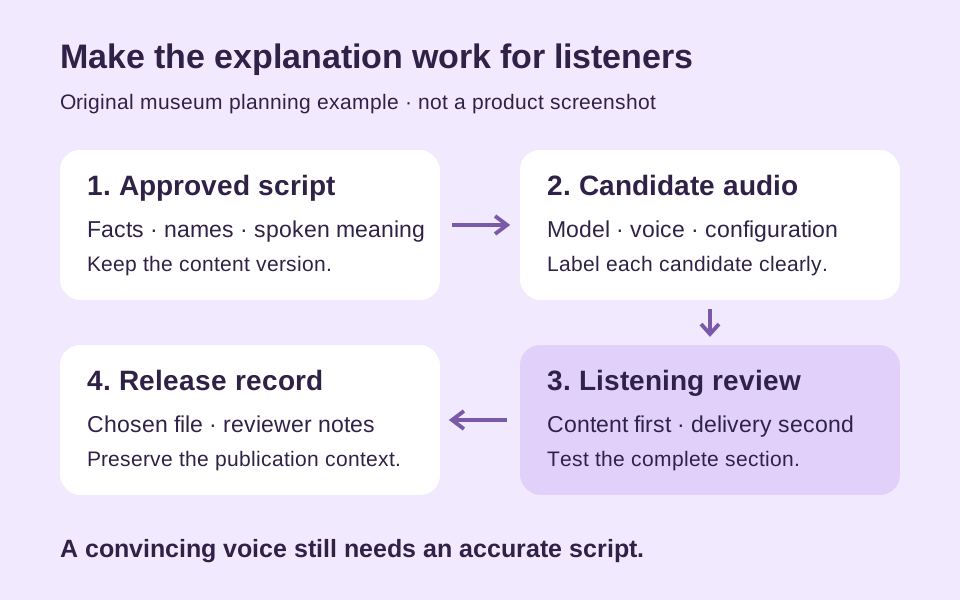
A short preview can miss an awkward ending, an unclear number or a transition that changes the listener's understanding. Listen through the actual candidate and compare it with the intended use. If it will accompany a video, review the combined result too.
For the pottery event, an otherwise clear spoken introduction could still mispronounce the venue or suggest that tools are included when the approved brief says otherwise. Separate factual checking from judging tone and rhythm. A reviewer should record the exact passage requiring attention so that the next revision has a purpose. This is an original editorial method, not a statement that WeBot automatically verifies every claim in a generated recording. The club needs to decide what is ready to share and preserve the version it actually approved.
Use English and Hindi as complete experiences
A bilingual project needs more than a translated headline. Check that dates, joining instructions, eligibility and the next action mean the same thing in both versions. Let each language use a natural sentence structure while retaining the approved facts.
Bridge Street can review the English and Hindi versions independently against one event brief. That makes a mismatch easier to locate than comparing only word counts or line breaks. If an audio introduction or visitor assistant is added, include those elements in the language review. This is a proposed process, not a claim that the fictional project has native-speaker certification. A language option in an interface does not by itself prove that every prompt, generated asset and response used in a project has been translated or reviewed correctly.
Review the estimate before authorising real work
WeBot's public information places credit calculation and generation behind verified sign-in, while its Creative API overview distinguishes estimates from final usage. Eligible service or plan access and sufficient credits also matter. Login alone does not automatically start generation. Use the current owned-account flow and applicable reference when evaluating an actual request. This guide provides no live price or promise about a fixed number of outputs per credit.
For the club, prepare a hypothetical budget that separates first candidates, revisions and final selections. Keep assumed quantities labelled as assumptions. A low estimate is not a reason to skip content review, and an attractive result does not explain its final usage by itself. The person authorising production should understand the chosen task and the intended limit before any real spending occurs. No account purchase, credit calculation or generation is performed as part of these planning examples.
Keep accepted requests separate from approved assets
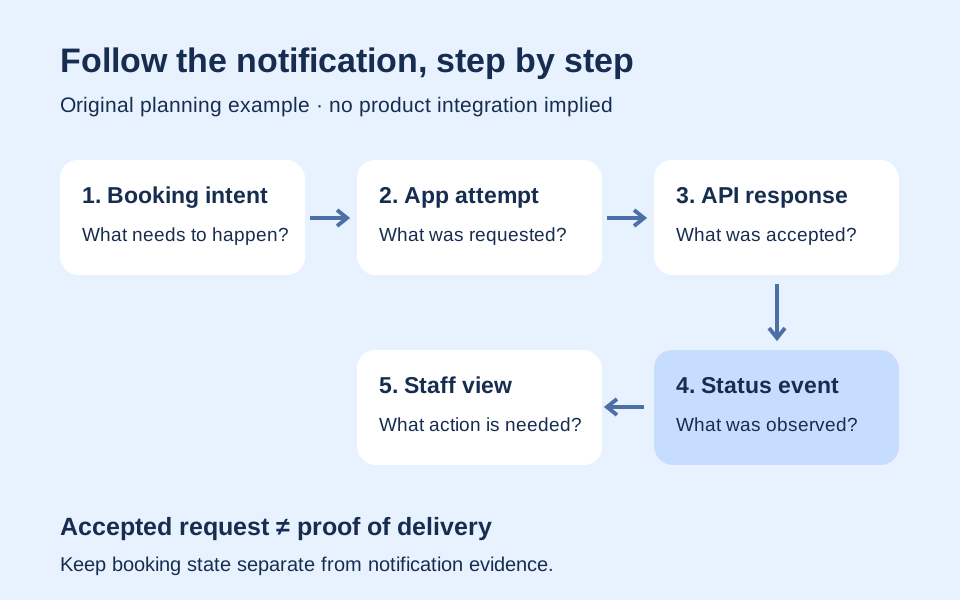
The Creative API overview describes asynchronous generation and the need to correlate events with the correct owned request. Read the current reference for the actual request and result contract before building a connection. An accepted request and a completed creative project represent different stages.
Bridge Street's project notes should distinguish a requested illustration, a result awaiting review and a poster approved for publication. Without that distinction, a dashboard can look successful while the organiser still has no usable invitation. This is a recommendation for the team's workflow, not a new WeBot API specification. Preserve the record that connects each candidate to its purpose, then make the editorial selection explicit. Reopening a page or receiving an event should not silently replace the poster the organiser already chose.
Decide whether a chatbot has a useful purpose
WeBot's public chatbot page describes ready-made floating or inline website widgets and headless JavaScript custom chat, with configuration and technical account references behind sign-in. It presents a chatbot as a way to answer from prepared business knowledge and guide visitors. Review the current owned setup before assuming a particular deployment is available to an account.
For the learning club, a sensible first purpose is explaining the published weekend schedule and where to find joining information. That is narrower than promising to solve every visitor's problem. Write the questions the assistant should answer and the situations that need a person. A focused purpose makes testing concrete: the team can ask whether the assistant explained an approved fact and offered the intended next step, rather than judging success by how long it kept a conversation going.
Prepare one approved set of information for the assistant
An information assistant needs a clear, maintained source of facts. The club should identify who approves the schedule, accessibility description, material requirements and contact route. Do not fill gaps with optimistic guesses simply because a conversational answer sounds more convenient.
Imagine a visitor asking whether a particular session has spare places. If the assistant has only a published timetable and no authorised live availability source, that distinction should shape its response. The club could direct the visitor to its ordinary booking route. This is an original knowledge-planning example, not a claim that WeBot currently connects to the club's booking system. Keep static information and account-dependent information separate so that the assistant's useful role does not expand into unsupported authority by accident.
Give instructions a clear scope
Agent instructions should describe the intended role, relevant sources and how to handle uncertainty. They should make the visitor's next useful action clear. A friendly tone does not replace the need to define what the assistant may say or which facts it must not invent.
Bridge Street might ask the assistant to explain the pottery weekend in short answers and request one clarification when a question is ambiguous. Test those instructions with examples that matter to the organiser. An answer can be polite and still fail the task if it directs a beginner to the wrong session. Keep instruction revisions with the approved source version. That record makes it easier to explain why a later response changed without treating every new conversation as an unrelated experiment.
Handle missing information openly
A useful assistant needs an understandable response when its source material does not contain the answer. Decide in advance which contact or next step it should offer. Guessing a confident answer can be more damaging than admitting the limit and guiding the visitor appropriately.
For the club, an unusual equipment request could require an organiser's decision. The assistant should not turn a general workshop description into a personalised guarantee. Include this case in the test set along with straightforward questions. Record whether the response preserved the boundary and gave a useful route forward. This is a proposed evaluation method, not an assurance that a configured assistant will always behave correctly. The team must inspect actual responses and improve the source or instructions when its intended behaviour is not achieved.
Treat personalisation as context, not proof of identity
The public chatbot guidance discusses supplying appropriate context through supported dynamic variables while keeping ownership and authentication in the application. Check the applicable signed-in integration reference before choosing the real implementation. A personalised greeting does not establish authority to disclose a person's account information.
Bridge Street could use a visitor's chosen display name to make an introduction clearer without exposing private attendance details. Keep the intended purpose of each value explicit. Test the case where a value is missing or inappropriate rather than assuming every request arrives with complete context. These are application design suggestions. They do not imply that Didloo supplies data to WeBot or that either platform's account boundaries can be bypassed by passing a name or identifier in a message.
Understand voice agents as a separate interaction
WeBot's voice-agent page describes preparing instructions, knowledge and conversation settings in an owned workspace. It makes calling options dependent on supported integrations, account configuration and plan access. Its public guide is service information, not an unauthenticated call control or a promise of unrestricted calling.
For the fictional club, first ask whether a spoken assistant would solve a real audience need. A voice interaction should make the purpose clear and handle the limits of the approved information. Test pronunciation, clarification and ending the exchange. This article neither configures a phone number nor submits a call. It also does not assert a particular telephony vendor relationship. The useful decision is whether the authorised service and the proposed conversation fit the project, using the account's current supported setup.
Test conversations beyond the easiest questions
A test plan should include ordinary questions, incomplete wording, a correction from the visitor and a question outside the source material. These cases reveal more than a polished demonstration built around one expected sentence. Keep a written expected outcome for each case.
Bridge Street might ask which session suits a first-time participant, then correct the preferred day midway through the exchange. Review whether the assistant responds to the corrected question rather than repeating an earlier answer. Add a question about information the club has not approved and inspect how uncertainty is handled. These are fictional tests, not measured results. The purpose is to make evaluation reproducible and useful to the organiser, rather than to invent a universal success rate from a few selected conversations.
Consider the Creative API only with the current reference
WeBot's public Creative API page introduces model discovery, input schemas and asynchronous results, while directing developers to the applicable references. Treat that overview as an orientation. An actual implementation must use the current documented identifiers, authentication and event-handling contract.
The club may need only an ordinary workspace for a small project. A developer considering a custom flow should first explain why it is needed and which responsibility the application will retain. Keeping API keys out of public browser code and preserving request ownership are basic design boundaries. This article makes no connection to the club's website and runs no API calls. It also does not present an independent vendor's endpoint as an interchangeable substitute for WeBot's documented interface.
Separate public discovery from private account records
A public service page is useful for understanding a task. It does not grant access to private configurations, saved conversations or another user's generated material. Keep that distinction visible when sharing a project with colleagues or publishing an explanatory guide.
Bridge Street can circulate its approved event brief and final poster without distributing account credentials or private visitor conversations. Decide which team member needs access to configuration and which needs only the chosen asset. This is a suggested organisational practice, not a claim about a particular role-management feature available to every account. The practical goal is to preserve ownership and useful collaboration without assuming that a public link, model name or friendly assistant response creates permission to read unrelated records.
Review the final destination on a phone
A promotional asset and an assistant should be evaluated where visitors will actually encounter them. Check the complete page or file, not only the workspace preview. The booking link, language and event information should remain understandable on a small screen.
For Bridge Street, open the approved invitation on a representative phone and follow the intended next action. If a chatbot is part of the proposal, check that its control and long answers do not obscure essential event information. For audio or video, review playback and the accompanying text together. These are proposed checks rather than a claim that this fictional deployment has passed them. A good project record names the environment actually tested and preserves any limitations instead of declaring universal mobile compatibility.
Keep the release decision tied to evidence
At the end of the project, gather the approved brief, selected assets, language versions and review notes. If an agent is included, keep its intended scope, source version and actual test outcomes. The final record should explain why the organiser considers this particular release suitable.
WeBot can be evaluated as a set of creative workspaces and agent services, with current capabilities and account requirements checked at the relevant destination. Bridge Street's responsibility is to define the task and judge the result honestly. That distinction supports a useful project without invented integrations, guaranteed outputs or promises that a tool automatically solves every communication problem. A later schedule change can then be addressed through known records and fresh review rather than assumptions about what an earlier successful demonstration must have proved.
Further reading
Official resources and related guides for the concepts discussed above. Check the selected tool for current capabilities and terms.
Take the next idea into a conversation
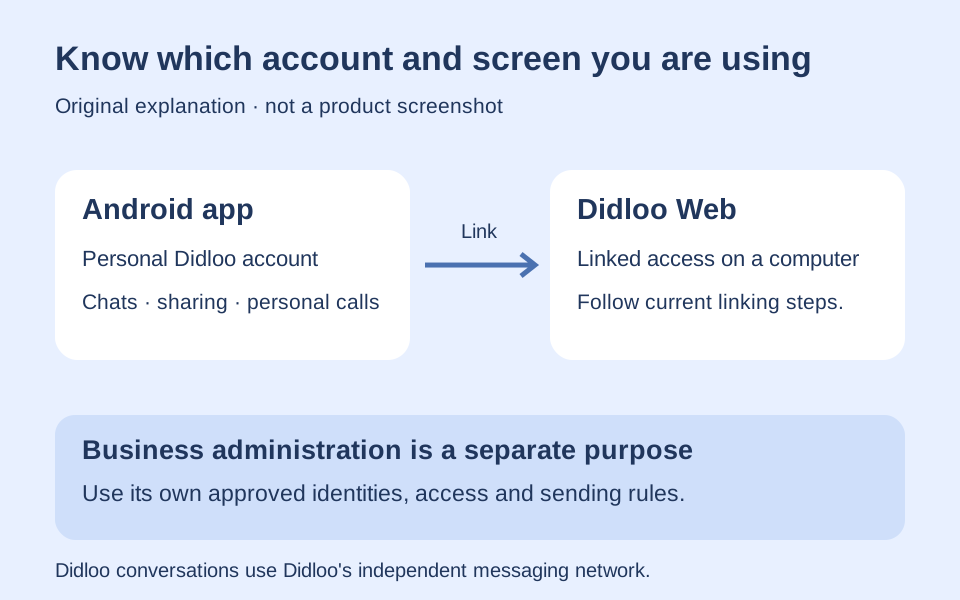
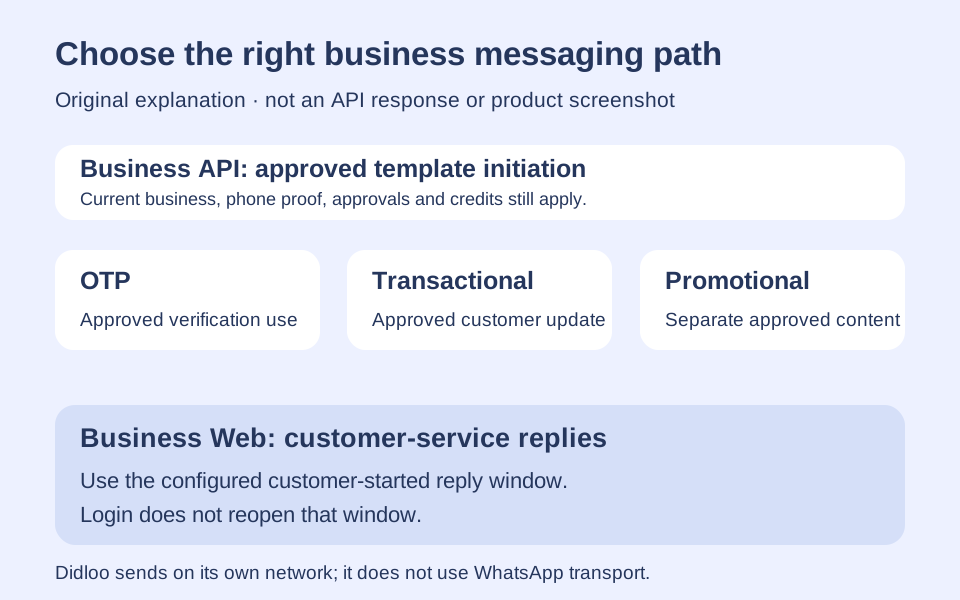
Explore Didloo for personal chats, creative sharing and linked desktop messaging. Business messaging has its own approved API workflow.